If you and your family love to travel and can see yourself taking a vacation each year, a timeshare can turn your trips into a lifetime of memories. However, before buying one, it is important to understand that not all timeshares work the same way. Different types of timeshares are best suited to different travel styles. Some are perfect for those who love building tradition in the same place each year, while others are ideal for travelers who want flexibility and variety. Getting to know each option is key to picking out the timeshare that best fits your lifestyle and travel preferences. In this blog, we’ll go over the different types of timeshares, explain how they work, and share how you can save a significant amount of money by purchasing on the resale market with BuyATimeshare.com.
Different Types of Timeshares Ownership





One of the most important distinctions among timeshare types is deeded vs. right-to-use vs. leasehold. Deed timeshares offer long-term ownership and are ideal for those who value stability and true ownership of the property. A right-to-use timeshare ownership provides access to a resort for a set period and appeals to those who want flexibility and no lifetime commitment. Leasehold timeshares include a deed, but for a set number of years.
Types of Timeshares: Deeded Ownership
When buying a deeded timeshare, you are purchasing your own share of real estate at a resort. With these types of timeshares, your name is listed on a deed to the property, similar to a traditional house. Deeded timeshares are also typically owned in perpetuity, which means they stay with you unless you sell and the property transfers to someone else. This type of timeshare works well for people who value long-term consistency year after year.
Types of Timeshares: Right-To-Use Timeshare Ownership
A right-to-use timeshare is different from a deeded ownership because you do not own a share of the vacation real estate by deed. Alternatively, you are purchasing the right to use a resort for a specified number of years, typically 20 to 50. Once the contract is over, you no longer have the right to use that property. This type of timeshare is great for owners who want to enjoy the benefits without a lifetime commitment. Owners of right-to-use timeshares often prioritize flexibility and prefer having an expiration date.
Types of Timeshares: Leasehold Timeshare Ownership
Leasehold timeshares fall somewhere in between deeded and right-to-use ownership, with some key characteristics of both. Similar to right-to-use, leased timeshare provides guaranteed vacation time for a set number of years rather than perpetual ownership. However, a leasehold timeshare involves a deed, making it similar to deeded ownership. These types of timeshares are often a much longer term than right-to-use. They typically range from 30 to 99 years, which can amount to a lifetime. Depending on the contract’s terms, you may not be able to pass a leasehold timeshare down in a will.
Subtypes of Timeshare Ownership

Each timeshare type has multiple subtypes that determine how owners can use it for vacations. Each option will affect the flexibility, need for advance planning, and overall experience for owners. These include points-based ownership, fixed-week ownership, floating-week ownership, biennial ownership, and fractional ownership.
Subtypes of Timeshares: Points-Based Timeshares
When you think of the modern vacation club timeshare, you are probably thinking of points-based timeshares. These are the most common in today’s world. This type of ownership provides you with a certain number of vacation points, depending on how many are in your timeshare contract. Instead of the traditional same-week same-resort model, you can use your vacation currency and decide where you want to stay, how long you want to go, and even the type of accommodation you stay in. These systems usually allow you to bank or borrow points for future vacations as well. A points-based timeshare owner typically values exploring new destinations and enjoys the flexibility of travel dates.
You can find points-based timeshares within the different main types of timeshares. A deeded ownership with a points-based timeshare model would be ideal for someone seeking long-term stability with a brand they love. Whereas a points-based right-to-use timeshare works well for those who want vacation ownership with flexibility and a shorter commitment.
Subtypes of Timeshares: Fixed Week Timeshare
Fixed-week timeshares are the traditional type, where you stay at the same resort each year during the same week. This option is the right choice for those who want a guaranteed yearly vacation during the same time every year, in a place they know they love. These kinds of timeshares are similar to vacation homes in that they are great for building traditions in one place. Whether you purchase a week with a particular holiday, a summer week, or any other time of the year, you will always know what to expect with these types of timeshares. This also requires no advance planning or resort bookings. You always know that there will be a room for you at your resort during your week. Sometimes you may even get to stay in the same unit.
A deeded fixed week is perfect for families who want to build long lasting tradition for generations. On the otherhand, a leasehold fixed week would be better for someone who wants their vacation time guaranteed for a certain number of years without passing it down.
Subtypes of Timeshares: Floating Week Timeshare Ownership
Floating timeshares offer slightly more flexibility than fixed weeks in terms of travel dates. They offer less flexibility than points-based timeshares for travel destinations. These types of timeshares allow you to book a week at your vacation property during a designated season. Some timeshare companies organize designated seasons using traditional winter, spring, fall, and summer. Others use titles such as silver, gold, and platinum to distinguish the busiest seasons. You may need to reserve your stay in advance for the busy season with a floating-week timeshare. This is because this structure doesn’t guarantee a specific week. Floating weeks are ideal for travelers who want to return to the same timeshare property but do not need the exact calendar week every year. This subtype, when combined with a deeded timeshare option, provides the security of long-term ownership while maintaining the flexibility to choose travel dates.
Subtypes of Timeshares: Biennial Timeshare Type
A biennial timeshare allows owners to use it every other year rather than vacation annually. This option is significantly cheaper than the alternatives because you will travel less often. Both the upfront and annual fees will likely be lower. These types of timeshares are a good option for those who prefer to spread out their vacations. These timeshares typically follow a structure based on the year owners can use them, during odd or even years. A deeded biennial timeshare is ideal for owners who want to truly own timeshare interests. Whereas a right-to-use biennial is for timeshare owners who want to take a vacation every other year for a set number of years.
Subtypes of Timeshares: Fractional Ownership
Fractional ownership is structured similarly to a timeshare, where you are sharing time at a vacation property with other owners. However, it differs in that fractional owners can receive a much larger portion of time at the resort. With a traditional timeshare, the year is divided into 52 weeks, each used by a different owner. But with fractional ownership, it can be divided into portions like a quarter share, which is the most common and offers around 10-12 weeks of usage time. Other timeshare increments include 1/6, 1/8, 1/10, and 1/12 shares, each providing four to eight weeks of vacation time per year. This shared ownership model typically attracts buyers seeking an extended luxury getaway each year.
How Vacation Exchange Companies Impact the Types of Timeshares
In today’s industry, most timeshare developers offer the option to join a vacation exchange network to broaden destination choices. These platforms work by uploading your week at your resort and exchanging it for another owner’s timeshare week at their resort. This allows owners to vacation at other resorts within other resort developers’ portfolios, regardless of the types of timeshares they own. This benefits owners of a fixed week who want to mix it up and try a different resort location. It also allows points-based timeshare owners to branch out beyond their brand.
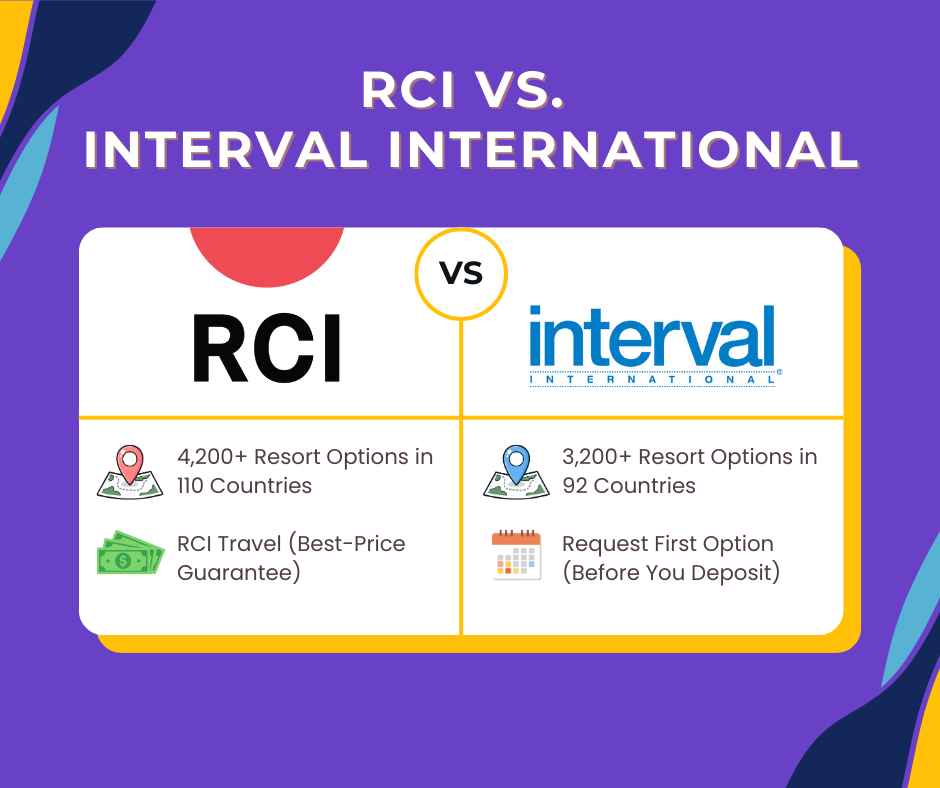
The two major vacation exchange platforms in the industry are Interval International and RCI, both with incredible timeshare resort properties. Keep in mind that these services are not free and typically come with exchange fees.
How to Pay a Fraction of Timeshare Developer Prices on the Initial Timeshare Cost
Whether you are interested in building an annual tradition with your family or exploring new destinations each year, timeshares are a great way to create lasting vacation memories. You may find that when browsing the timeshare market directly from developers, prices can be quite high. Timeshare resales are a great way to reduce the initial cost of ownership, even with the biggest names in the timeshare industry. Since they are advertised by owners rather than by the businesses themselves, resale prices are often significantly lower. BuyATimeshare.com’s secondary market features all types of timeshares from brands including Disney Vacation Club, Holiday Inn Club Vacations, Marriott Vacation Club, Bluegreen Vacations, and more.
Once you find a timeshare that you love, the buying process is easy! Simply fill out the secure online form to place an offer. If you need any guidance, our friendly team is happy to help. Once your offer is accepted, we will connect you with Timeshare Broker Associates, our recommended resale brokerage, to help you close with confidence. Say goodbye to cramped hotel rooms and hello to the unbeatable resort amenities and accommodations of a timeshare property.
As an ARDA (American Resort Development Association) recognized business, BuyATimeshare.com operates under a strict code of ethics and has the experience to guide you through all things timeshares. For assistance at any step of the process, do not hesitate to call or email us for assistance.
Own A Timeshare and Want to Sell?
BuyATimeshare.com understands that plans change, and you may be ready to let go of your timeshare. We have been in the timeshare resale business for over 20 years and have the experience to guide you through the selling process. To get started, gather your ownership details and contact us at 1-800-640-6886 for personalized guidance. Once you have spoken to one of our experts, we will create an ad for your timeshare on our website. As offers come in, you can decide which offer works best for you! Lastly, our partners at Timeshare Broker Associates will assist you in the closing and transfer process.